Back when I was spending my afternoons cycle-locking between the SEGA Genesis and the original Nintendo, "socializing" meant having two friends over on a Friday night, fighting over a controller while someone sat on the floor because we ran out of seats. It was intimate, loud, and physically exhausting. Today, that dynamic has completely shifted. When people argue that gaming has overtaken television as our primary social outlet, they aren’t just talking about the technology; they are talking about the move from passive observation to active participation.
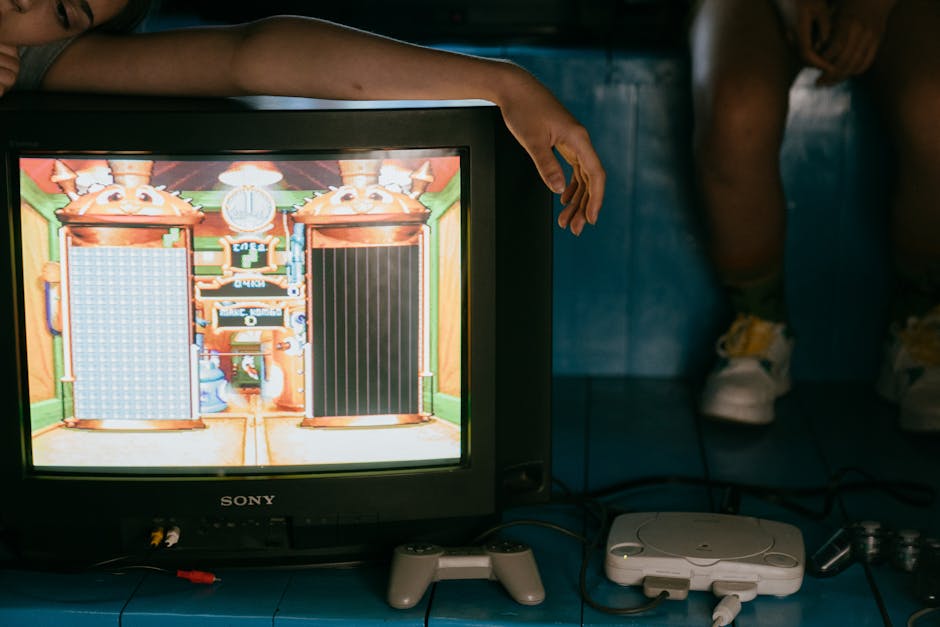
Television is a broadcast medium. You sit, you watch, you consume. You might tweet about a show or talk about it at the watercooler the next day, but you are a spectator. Gaming, however, is a dialogue. Whether you are on a PC, a console, or a mobile device, you are participating in a shared narrative or a competitive space. That distinction is why, for many, the "shared online experiences" of a lobby are far more meaningful than sitting through a season finale of a streaming series.
Arcades were the original social hub
Before home consoles became the dominant force, the local arcade was the place to be. It was the original social network. You walked in, you dropped a quarter on the machine to "call next," and you immediately had an opening to talk to the person playing. There was an unspoken hierarchy of skill and community. When we moved to the home era, we lost that physical proximity, but we kept the desire for connection.
For a while, consoles like the original PlayStation or Xbox felt like islands. You played alone, or you played with whoever was in your living room. Then, online connectivity changed everything. It took that arcade spirit—the idea of playing alongside others—and removed the geographic barrier. You didn't need to go to a physical location to find a community; you just needed an internet connection.
Multiplayer socializing defines the experience
The rise of "voice chat hangouts" is perhaps the clearest indicator of this cultural shift. In the past, if you wanted to hang out, you met up. Now, a Discord channel or an in-game lobby acts as a modern-day park bench. You see groups of people hopping on their PC, console, or mobile devices not necessarily to climb a leaderboard, but simply to exist in the same virtual space while they talk about their days.
This is where platforms like NoobFeed have become vital. They provide the context for these interactions, helping players find common ground before they ever drop into a match. It’s no longer just about the mechanics of the game; it’s about the community that surrounds the title. If you look at the landscape of modern digital interaction, the game itself is often secondary to the people you are playing with.
The barriers to entry are dissolving
There is a persistent myth that you need to spend a fortune to be part of these social circles. While there are plenty of enthusiasts who invest in $1,000+ hardware setups for high-fidelity gaming, that is not the requirement for community. Cloud gaming has been a massive equalizer in this regard. By offloading the processing power to a remote server, cloud gaming allows someone with an older laptop or a basic smartphone to access the same social spaces as someone with a high-end rig.
This accessibility is why gaming has moved past being a "niche" hobby. It is mainstream. When you can jump into a multiplayer session on a mobile device while commuting, the concept of a "gamer" as a specific type of person loses all meaning. It is just a person, using a device, to reach out to other people.
Spectatorship is a participatory act
We need to talk about how streaming culture has evolved. Platforms and communities like Releaf and NICE have fostered environments where spectators aren't just watching; they are part of the process. In traditional television, you are disconnected from the creator. In gaming, the streamer is often reading the chat, responding to questions, and changing their behavior based on the audience’s input.
This creates a feedback loop that feels much more personal than traditional broadcast media. You aren't just watching a show; you are part of a live, evolving conversation. It is a shared online experience that TV, with its rigid production schedules and pre-recorded content, simply cannot replicate.
Medium Social Nature Level of Participation Television Passive/Asynchronous Low (Viewing) Gaming Active/Synchronous High (Interacting) Streaming Interactive Moderate (Contributing)A quick note on your health
As a long-time player and moderator, I have seen the dark side of this "always-connected" culture. The social pressure to be online, to keep up with the squad, and to maintain your rank can lead to serious burnout. I’ve moderated threads where players admit to staying up until 4:00 AM, skipping sleep to keep a streak alive. Please, take care of yourselves. The community will be there tomorrow. If your "socializing" is costing you your health, you aren't doing it right. Turn off the console, close the laptop, and get some rest. The digital world isn't going anywhere, but your physical well-being is finite.
The future of the digital town square
When we look at why gaming feels more social than TV, it comes down to agency. TV tells you a story; games invite you to help write it, or at least share the space while someone else does. As tools continue to evolve, the distinction between "playing" and "hanging out" will blur even further.
Whether you prefer the precision of a PC, the ease of a console, or the portability of a mobile device, the goal remains the same for most of us: to find a group, have a laugh, and feel like we belong to something bigger than ourselves. We’ve moved past the "console wars" and the gatekeeping of the 90s. We’ve entered an era where the hardware is just a bridge, and the real substance is the people sitting on the other side noobfeed.com of that connection.
Voice chat hangouts: The modern equivalent of a phone call or a street corner meet-up. Multiplayer socializing: Collaborative tasks that build actual social bonds, not just high scores. Shared online experiences: Creating memories in virtual worlds that hold the same weight as physical experiences.If you are still wondering why your friends seem more invested in their sessions than in the latest prestige drama on TV, it is because they aren't just watching content. They are living in it, together. And honestly? That’s not a bad way to spend an evening.
