If you hang out in the chat of any popular live-broadcasting site late at night, you’ve seen it. Somewhere between the https://dlf-ne.org/gaming-has-grown-up-why-its-more-than-just-a-teen-pastime/ emote spam and the conversation about the game’s meta, a user will drop a message like: "Aren't you worried about the blue light? You're going to ruin your sleep!"
As a parent of three, my gaming hours are strictly regulated by the "When the kids are finally asleep" rule. I’m often sitting there, staring at a monitor preventing eye strain from blue light at 1:00 AM, wondering how I’m going to function at the school drop-off line in six hours. I also happen to keep a running note on my phone tracking my sleep quality after these late-night sessions. So, when I see these comments, I find myself asking the big question: What does this change for normal players?
The Science vs. The "Streamer Lifestyle"
Let's get the buzzword-heavy marketing out of the way first. There is a massive industry built around "gaming glasses" and blue-light-blocking software. However, if you look at actual health organizations—like the American Academy of Ophthalmology—they aren't exactly screaming from the rooftops that your monitor is going to blind you. The reality is that the "blue light" issue is often conflated with "digital eye strain."
The streamer lifestyle is often framed as this glamorous, high-octane esports career. But for 99% of people, it’s not about high-stakes tournaments. It’s about community. It's about a creator playing a cozy farming game on a mobile device or firing up a title through a cloud gaming server on their laptop while chatting with their audience. When people bring up sleep in the chat, they aren't usually acting as medical professionals; they are participating in a parasocial relationship. They see someone they watch every night, and they project their own concerns about the "always-on" nature of modern life onto that creator.
Gaming as Our Modern "Third Place"
We need to stop pretending that gaming is just about the game. Streaming platforms and Discord servers have effectively become the "third place" for our generation. Just like coffee shops or park benches were for our parents, the chat window is where we build our social connections.
Because these spaces are now accessible 24/7, the social aspect often runs right up until bedtime. If you’re hanging out in a Discord voice channel or watching your favorite creator wind down their stream, you are engaging in a social ritual. The blue light talk is a byproduct of that intimacy. It’s the digital equivalent of a friend telling you, "Hey, go to bed, you look tired."
The Impact of Accessibility
Years ago, you needed a desktop tower and a dedicated room to game. Now, thanks to the massive rise in mobile gaming and the maturity of cloud gaming services—which render the high-end graphics on remote servers so you don't need expensive hardware—you can play anywhere. This means you can play in bed. You can play on the couch while the kids are watching cartoons. You can play while you're technically trying to fall asleep.
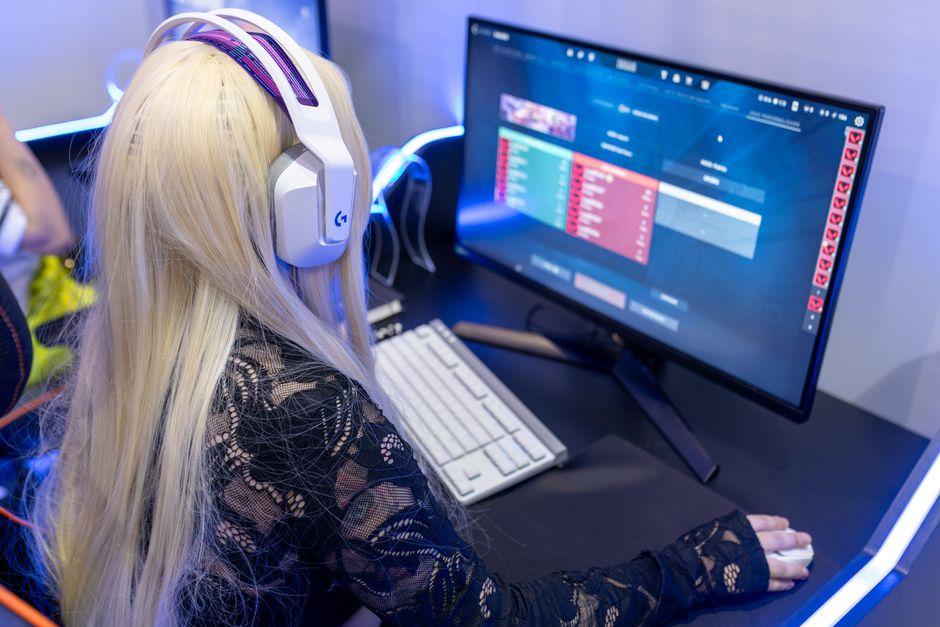
This accessibility is a double-edged sword. It has democratized gaming, allowing people with limited budgets to access top-tier experiences. But it has also removed the "friction" that used to stop us from gaming at 2 AM. When you don't have to walk to a different room to boot up a console, the boundary between "leisure time" and "sleep time" dissolves.
Data: My Personal Sleep Tracking
I started tracking my own sleep after gaming sessions to see if there was a correlation between "screen time" and my morning mood. I don't use expensive clinical equipment; I use a standard wearable and a note-taking app. Here is a look at what I’ve found over the last month.
What does this mean for the normal player? It’s rarely just the "blue light" from the pixel density of your monitor. It’s the nature of the game and the environment. Playing a high-stress competitive title keeps your brain in a state of hyper-arousal. That’s not a blue light issue; that’s an adrenaline issue. My data suggests that the stimulation of the game itself impacts my sleep quality far more than the light temperature of my monitor.
Why the Chat Mentions It
When someone mentions blue light in a stream, they are usually trying to connect. It’s a way of saying, "I care about your well-being." It’s also a way of acknowledging the screen-heavy world we live in. We are all aware that we spend too much time staring at displays. When we see a streamer doing it, it’s a reflection of our own reality.
However, we have to be careful about making medical claims. There is a lot of pseudo-science floating around the internet about how screens "ruin" your circadian rhythm. While light exposure does play a role, making health claims without citing clinicians or regulatory bodies (like the CDC or the Sleep Foundation) is where things get messy. As a parent, I want my kids to understand tech, but I don't want them to be afraid of it because of a comment they read on a screen.
What Should You Actually Do?
If you're a gamer who loves their late-night sessions, you don't have to quit. You just have to be mindful. Here is how I’ve adjusted my habits without giving up my hobby:
The "Cool Down" Phase: Shift from high-intensity games to something slower or more relaxing about 30 minutes before you want to actually sleep. System Settings: Most operating systems and cloud gaming clients have "Night Light" or "Blue Light Filter" settings baked in. Use them, but don't expect them to be a magic cure-all. Disconnect the Social Component: If the Discord chat is keeping you hyped up, set your status to "Do Not Disturb" or close the window. The social connection is great, but it’s often what prevents us from winding down. Watch the Adrenaline: If you find yourself clenching your jaw or leaning into the monitor during a intense match, you aren't going to sleep well, regardless of your screen's light spectrum.Conclusion: The "Normal Player" Perspective
So, the next time you see someone mentioning blue light in a chat, don't roll your eyes. They are engaging in the modern, digital equivalent of checking on their friends. But don't let it become a source of anxiety, either.
Gaming has become the primary way we socialize, learn, and relax. For a parent juggling kids and a career, those late-night hours are often the only time I have for myself. I’m going to keep playing, I’m going to keep tracking my sleep, and I’m going to keep questioning the hype. The "streamer lifestyle" isn't about being a professional athlete; it’s about being part of a community. And being part of a community is good for you—even if it means a little less sleep once in a while.
Everything in moderation, right? Now, if you'll excuse me, I have a raid starting in ten minutes.