I spend an unhealthy amount of my time standing in foyers. Before I check in, before I look for the restroom, and long before I engage with any "content," I evaluate the threshold. Is the entrance an invitation or a bottleneck? Does it drag the visitor in, or does it force them to hesitate?
In my twelve years as a wayfinding consultant, I have sat through Click for more hundreds of design reviews where someone inevitably suggests, "Let's make it immersive." When I ask them to define that, they usually point to a mood board full of neon lights or a high-contrast wall. They treat lighting design and color psychology as decorative flourishes rather than the structural bones of navigation. This is a mistake. These aren't just aesthetic choices; they are the primary tools for manipulating human behavior in a space.
But which one moves the needle more? To understand this, we have to stop thinking about decoration and start thinking about narrative pacing and spatial zoning.
The Physics of Perception: Lighting Design as the "Good Queue"
If you want to move a crowd, you don't need a sign—you need a gradient. Light is the primary director of the human eye. We are phototropic by nature; we gravitate toward the brightest point in our field of vision.
When I review a retail flagship or a museum layout, I look for the "Good Queue." A good queue is invisible. It uses lighting design to create a visual hierarchy that makes the "correct" path feel like the path of least resistance. If you dim the peripheral zones and punch up the brightness on the transition point, you have effectively eliminated the need for signage.
Consider the difference between a high-contrast spotlight and an ambient wash:
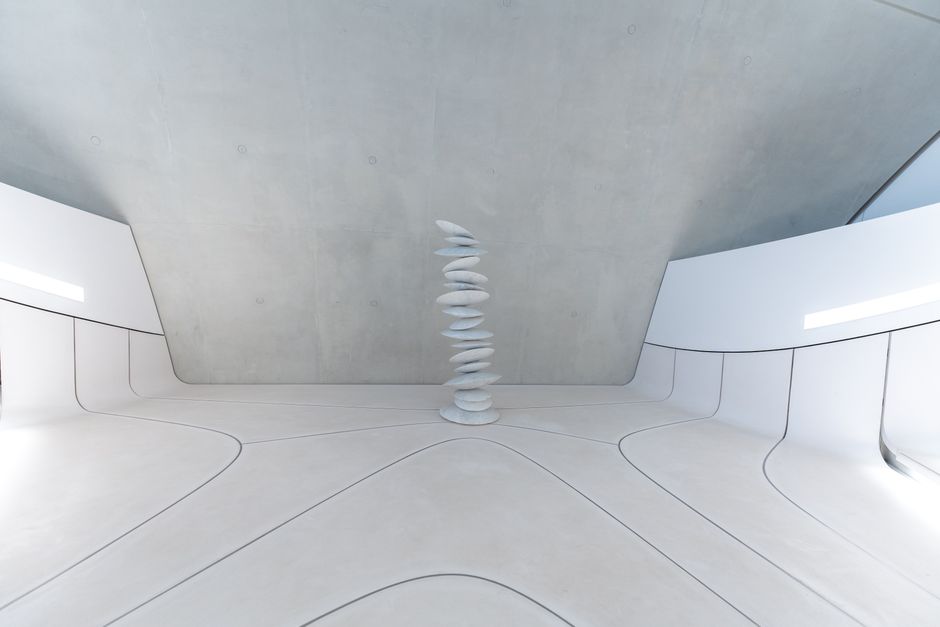
When designers rely on passive, vague lighting, visitors stall. They stop in the middle of a gallery because they don't know where the narrative arc continues. If you want to change behavior, you must use light to define the *next* step, not just illuminate the current one.
Color Psychology: More Than Just "Mood"
Color psychology is often misunderstood. We hear that "blue makes people calm" or "red increases heart rate," but this is a simplistic view. In reality, color is a tool for visual hierarchy. It helps the brain categorize space.
Think about how you move through a space. If https://dlf-ne.org/how-do-you-design-emotional-connection-into-a-building/ a transition zone is painted the same tonal value as the destination room, you lose the sense of arrival. You lose the "narrative break." Color should be used to demarcate boundaries. If I am designing a hospital corridor, I use color not to make people feel "happy," but to provide a distinct identity to a zone so the visitor understands they have moved from a public area to a clinical one.
Where designers fail is in the saturation trap. They use high-intensity color to "draw attention," but the human eye quickly becomes fatigued. If every wall screams for attention, the visitor stops looking at anything. Perception in spaces is about balance—using color to provide context rather than stimulation.
The Digital Parallel: Lessons from UI and MRQ
You might wonder why an architectural writer is looking at digital platforms like mrq.com. The answer lies in digital UI/UX. The best digital interfaces are effectively high-speed architectural models. When you navigate a site like MRQ, the interface uses visual hierarchy—color, contrast, and layout—to guide your finger to a specific action.
Notice how their interface zones the content. They don't just dump all their games in one pile. They use subtle color shifts and light-based highlights to tell you, "This is the current category, that is your balance, and this is your search function."
This is exactly what we need to do in physical architecture:
- Spatial Zoning: Just as a website divides content, we must divide physical floors using color palettes that indicate function. Frictionless Flow: Digital designers obsess over "clicks to conversion." In architecture, we should obsess over "steps to arrival." If a visitor has to look around for the elevator, your spatial zoning has failed. Visual Cues: MRQ uses specific, consistent colors to highlight calls to action. In a museum, we should use a consistent highlight color for all wayfinding information.
When the digital and physical worlds start speaking the same language, the visitor stops feeling "lost" and starts feeling "directed."
Narrative Pacing: Orchestrating the Visitor Journey
I am often asked, "Can you make this space feel more immersive?" I usually reply by asking them what story they are trying to tell. If there is no narrative, there is no immersion—only distraction.
Narrative pacing is the deliberate speed at which a person moves through a building. You want the visitor to rush through the transition zones and linger in the "hero" zones. To achieve this, you need a choreography of light and color.
The Compression (Threshold): Lower the light levels and use a neutral, calming color scheme. This creates a "breath" in the narrative. The Expansion (Hero Zone): Introduce higher contrast lighting and accent colors. This tells the visitor, "You have arrived. This is the moment of interest." The Reset (Transition): A return to a secondary neutral, signaling that the "chapter" is over and the next one is beginning.If you maintain high intensity throughout, you are not creating an "immersive experience." You are creating a sensory headache. Visitors will leave faster, not because they are bored, but because they are physically exhausted by your lack of pacing.
Clarity is the New Luxury
If you look at the most successful spaces—the ones where people naturally know where to go without reading a single sign—they all share one trait: clarity. They aren't trying to be "immersive" with clever gimmicks; they are trying to be intuitive.
Lighting design should act as the primary navigational guide, while color psychology acts as the structural map. When you layer these two, you create a space that respects the visitor's cognitive load.
Refining Your Space: A Checklist for Architects
If you are struggling to move people through your building, check these three things:
- Are your thresholds identifiable? Can a visitor see the transition from one zone to the next from 20 feet away? Is your lighting task-based or just generic? If your lighting is uniform everywhere, you are failing to guide your visitor. Is your color usage consistent? If you use "emergency red" for decorative trim, you are confusing your users. Color must have a semantic, consistent meaning throughout the floor plan.
We need to stop obsessing over the "cool factor" and start obsessing over the flow. Architecture is not a static art; it is a time-based medium. Every room is a frame in a film, and lighting and color are the director’s tools for controlling the pace. If you use them correctly, the visitor won't even realize they are being guided—they will simply feel that the space "just makes sense." And that is the only kind of immersive experience that actually works.